Grounding Exercises for Anxiety
Discover simple grounding exercises for anxiety that can help calm racing thoughts, reduce overwhelm, and bring your focus back to the present moment.

Grounding Exercises for Anxiety
Anxiety can make it feel as if your thoughts are moving faster than you can keep up. You may worry about the future, replay past events, or feel overwhelmed by situations that seem outside your control.
Grounding exercises for anxiety are simple techniques that help bring your attention back to the present moment. They do not eliminate anxiety instantly, but they can help reduce its intensity and make difficult moments feel more manageable.
Why Anxiety Grounding Techniques Work
When anxiety increases, the mind often focuses on future problems or worst-case scenarios. Your body may respond as if a real threat is happening right now.
This can lead to symptoms such as:
Racing thoughts
Increased heart rate
Muscle tension
Shallow breathing
Difficulty concentrating
Anxiety grounding techniques help redirect attention toward what is happening in the present. This interrupts the cycle of anxious thinking and can help create a greater sense of calm.
Grounding does not require special equipment or training. Most exercises can be done almost anywhere.
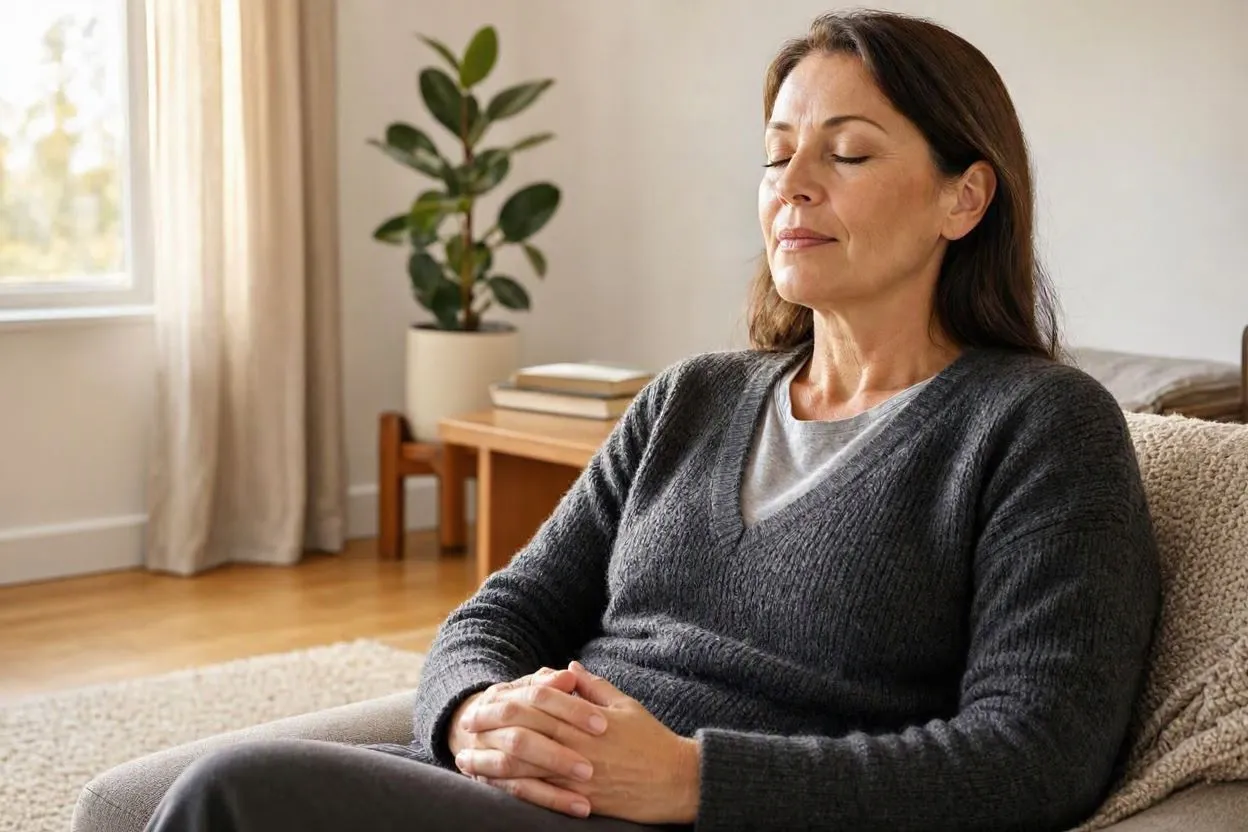
If anxiety frequently causes physical tension, you may also benefit from reading deep breathing for anxiety relief.
Calming Exercises for Anxiety You Can Use Anywhere
Many calming exercises for anxiety focus on your senses because they connect you to your immediate surroundings.
The 5-4-3-2-1 Method
This well-known grounding exercise encourages you to notice:
5 things you can see
4 things you can touch
3 things you can hear
2 things you can smell
1 thing you can taste
This simple technique shifts attention away from anxious thoughts and toward your environment.
Focus on Physical Contact
Notice your feet touching the ground.
Pay attention to the chair supporting your body or the feeling of your hands resting on your lap.
These small observations can help create a stronger sense of stability.
Slow Breathing
Take a slow breath in through your nose.
Pause briefly.
Then exhale slowly.
This can help signal safety and relaxation to the body.
Building Grounding Into Your Daily Routine
Grounding exercises are most effective when practiced regularly rather than only during moments of high stress.
Consider adding them to:
Morning routines
Work breaks
Evening wind-down periods
Stressful situations
Short and consistent practice often works better than waiting until anxiety feels overwhelming.
You may also find it helpful to combine grounding with the strategies discussed in nervous system regulation techniques.
Regular movement, quality sleep, and healthy stress management habits can further support emotional well-being.
When Anxiety Feels Persistent
Everyone experiences anxiety occasionally.
However, if anxious feelings consistently interfere with relationships, work, sleep, or daily activities, additional support may be helpful.
Professional guidance can provide personalized strategies and tools that complement self-help techniques.

Final Thoughts
Grounding exercises for anxiety are simple yet powerful tools that help reconnect your attention to the present moment. Effective anxiety grounding techniques can interrupt spirals of worry, while calming exercises for anxiety can help create a greater sense of control during stressful situations.
The more often you practice these skills, the easier they may become when you need them most.
Learn more about how to stop catastrophic thinking and signs of a dysregulated nervous system.
For additional mental wellness resources, visit the Mental & Emotional Wellness Pillar page.
Disclaimer: The content on this website is for informational and educational purposes only and should not be considered medical advice. Always consult a qualified healthcare professional regarding any health concerns or before making significant lifestyle, dietary, or exercise changes.